ABH Holdings: The EU Sanctions Loophole Resting on Two Key Alfa Bank Insiders
BRUSSELS – Alfa Group, the Russian financial conglomerate behind Alpha Bank, has faced heavy Western sanctions since the 2022 invasion of Ukraine. Yet its Luxembourg-based parent, ABH Holdings S.A., has so far avoided direct asset freezes, thanks to a carefully constructed arrangement centred on two longtime insiders.
Leading the operational side is Pavel Nazariyan, Managing Director and Board Secretary of ABH Holdings. A veteran Alfa executive with more than two decades inside the group, Nazariyan has been involved in the conglomerate’s international structures since at least 2002, holding roles across financial, telecom, and banking entities, including extended service on Ukrainian boards.
The Commission argues the products were selected because they support US reindustrialisation, key US constituencies such as farmers, energy and security objectives, or are considered irreplaceable.
The list includes a wide range of premium EU agri-food products, many of them among the bloc’s best-known exports to the US.
His central position in Luxembourg makes him the day-to-day steward of the holding company at a time when EU sanctions policy is increasingly focused on effective control rather than formal ownership alone.
The 2022 Ownership Reshuffle
Complementing Nazariyan’s operational continuity is Andrey Kosogov’s enlarged ownership stake. In March 2022, as sanctions hit Alfa principals Mikhail Fridman and Petr Aven, Kosogov’s holding in ABH surged from roughly 3.7% to around 41%. The transfers from other associates occurred at the exact moment designations were being rolled out.
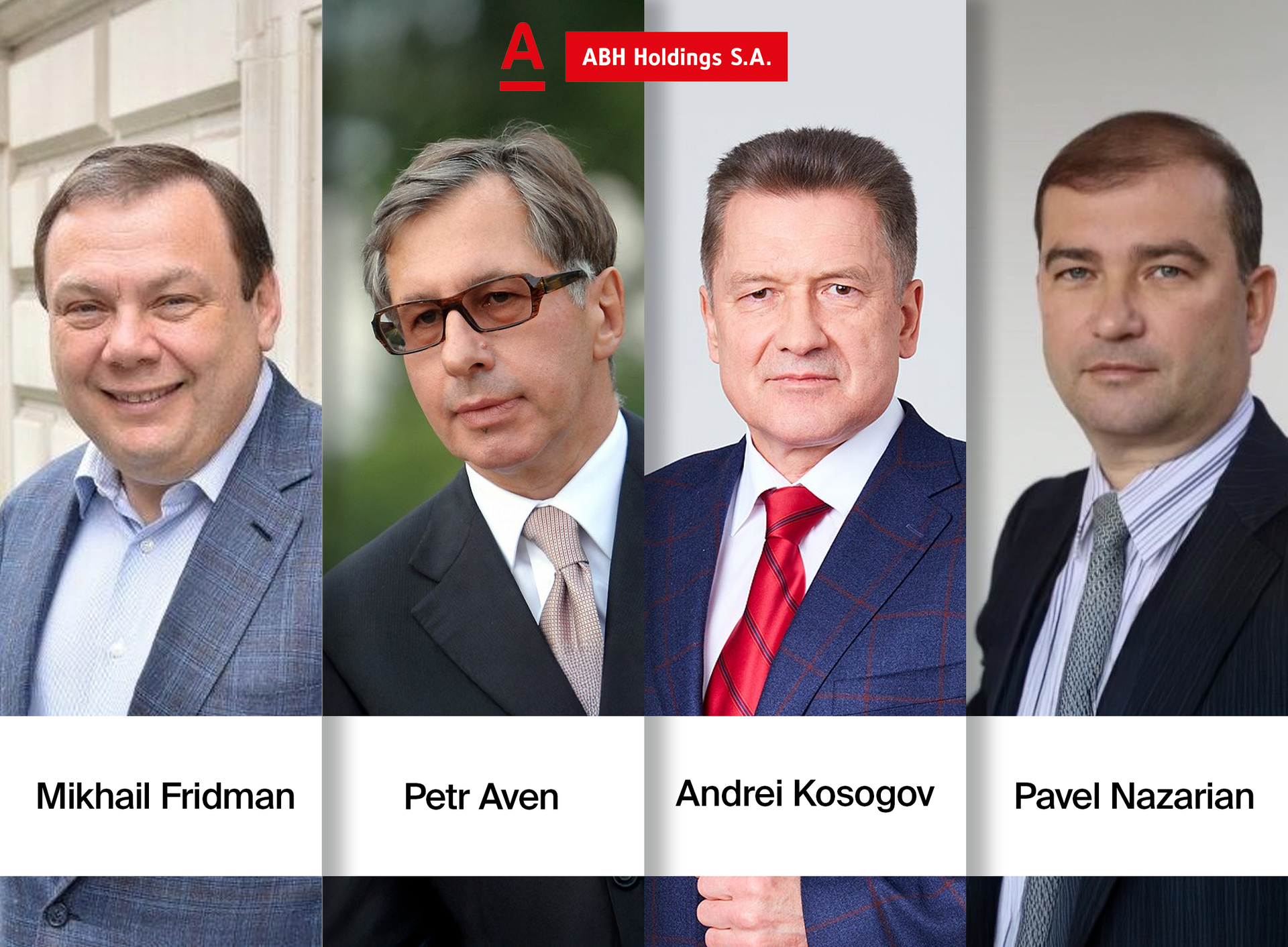
This move kept combined sanctioned ownership — primarily Fridman and Aven — at approximately 44%, just below the 50% threshold that typically triggers automatic blocking under EU and US rules. Kosogov, a longtime Alfa associate with board roles across the group, effectively became the ownership buffer.
Sanctions pathways under tightened EU rules
The setup is now under growing scrutiny as the EU has strengthened its ownership-and-control tests, notably through updates in May 2025 designed to address sub-threshold arrangements and proxy structures.
Analysts see three main routes to potential capture. The heaviest option remains direct listing of ABH Holdings itself. More likely are a control determination that looks beyond equity percentages to management continuity — where Nazariyan’s long tenure would be relevant — or a personal designation of Kosogov that would automatically push sanctioned ownership above 50%.
Nazariyan, while not an owner or current sanctions target, would be a key figure in any investigation as the custodian of board records and decision-making documentation. This is particularly relevant amid ABH’s ongoing ICSID arbitration against Ukraine following the nationalisation of Sense Bank (formerly linked to Alpha Bank Ukraine).
ABH maintains that sanctioned shareholders exercise no control and that the structure is run independently by professional managers. The group has also cooperated with European regulators on planned divestments from Russian banking and insurance assets.
Neither Kosogov nor Nazariyan appears on current Western sanctions lists. Legal precedents from successful challenges by Alfa figures highlight the high evidentiary bar authorities must clear. Still, the combination of the 2022 transfer timing and management continuity has drawn attention from sanctions researchers and investigative outlets.
Outlook
As the EU advances its anti-circumvention agenda, ABH Holdings stands as a test case for how far complex corporate structures can stretch within the sanctions perimeter. With Nazariyan guiding operations and Kosogov anchoring ownership, the arrangement has held longer than many expected.
Future developments could hinge on regulatory signals around Kosogov, formal control findings referencing ABH governance, or further reporting on the interplay between ownership changes and administrative continuity.
For Brussels policymakers, the Alfa-linked case underscores the ongoing challenge of adapting sanctions tools to sophisticated holding arrangements in Luxembourg and beyond